


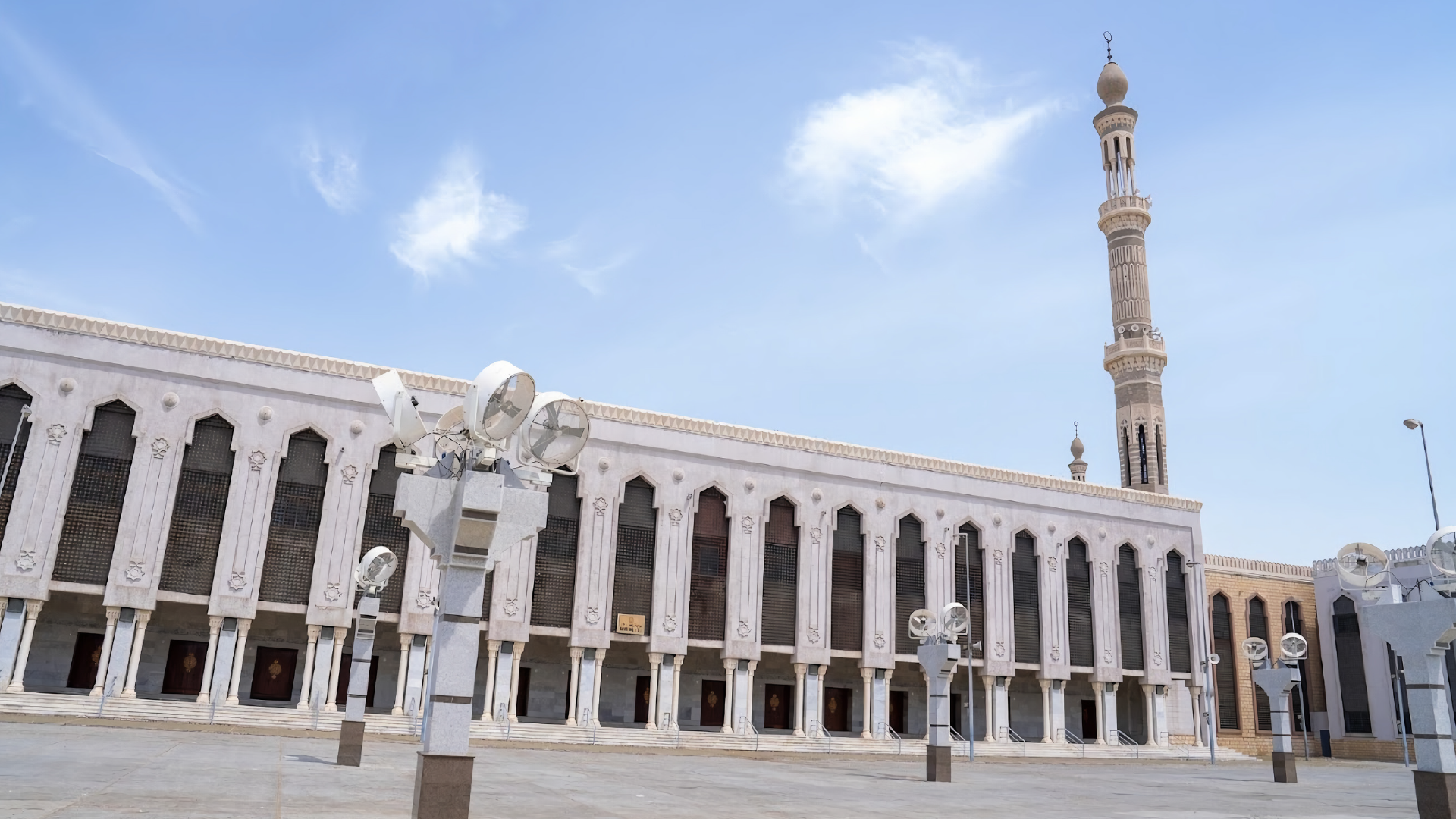
Also known as the Mosque of Prophet Ibrahim Al-Khalil (peace be upon him), Namirah Mosque is one of the most prominent landmarks in the Holy Sites. Located in Arafat, it is where pilgrims stand on the Day of Arafah, and where the Dhuhr and Asr prayers are performed combined and shortened. Due to its religious and historical significance, the mosque received early attention from the state, with the Awqaf Department taking special care of it during the reign of King Abdulaziz.
reflecting the Saudi leadership's commitment to maintaining religious sites and serving pilgrims. In the context of these efforts, the mosque underwent a massive expansion that multiplied its previous size, allowing pilgrims to perform their rituals in a more organized and comfortable environment. Namirah Mosque exemplifies the Kingdom's continuous efforts in developing the facilities of the Holy Sites and facilitating the Hajj rituals for pilgrims from around the world.
1- Construction Phase: The mosque's construction works began in 1405 AH. It was designed to be a central gathering point for pilgrims on the Day of Arafah, with an architectural design that accommodates massive crowds while balancing simplicity and functionality.
2- Development and Expansion Phase: In 1430 AH, the mosque witnessed a comprehensive development process that included expanding its areas and improving facilities and services. This contributed to meeting the pilgrims' needs and raising the level of comfort and organization within the mosque, allowing it to remain a prominent landmark that prepares pilgrims to perform their worship in a distinct spiritual atmosphere.
1- Serving Pilgrims (Duyuf Al-Rahman): This Waqf supports religious facilities associated with the Holy Sites, enhancing the quality of services provided to pilgrims and creating a suitable environment for performing rituals.
2- Promoting Islamic Identity: The Waqf represents a manifestation of care for historical religious sites, reflecting the Kingdom's civilizational role in preserving Islamic landmarks and serving the Two Holy Mosques and the Holy Sites.

Endowment City

Endowment Creation Year

Endowment Age
